What's new
USCHO Fan Forum

This is a sample guest message. Register a free account today to become a member! Once signed in, you'll be able to participate on this site by adding your own topics and posts, as well as connect with other members through your own private inbox!

  • The USCHO Fan Forum has migrated to a new plaform, xenForo. Most of the function of the forum should work in familiar ways. Please note that you can switch between light and dark modes by clicking on the gear icon in the upper right of the main menu bar. We are hoping that this new platform will prove to be faster and more reliable. Please feel free to explore its features.

The Sad Case of the Patient Protection and Affordable Care Act

Status
Not open for further replies.
Re: The Sad Case of the Patient Protection and Affordable Care Act

It is an interesting piece. Unsaid is that the ACA is the antithesis of conservatism.

Really?

We have reams of data that say that early diagnosis of illnesses is cheaper in the long run. This helps that cause. Isn't that a conservative thing to do?
 
Re: The Sad Case of the Patient Protection and Affordable Care Act

Interesting piece on the Roberts decision as a harbinger of the return of sincere conservatism in America, after decades of right wing utopian radicalism.

The money shot:

But at some point, conservatism must re-emerge, if only because we so desperately need it. Conservatism is, after all, a philosophy that tends to argue that less equals more, that restraint is sometimes more powerful than action, that delay is often wiser than headlong revolution. It reveres traditional rules and existing institutions, especially endangered elite institutions that the Founders designed to check and cool the popular will. Roberts took a small step toward resuscitating that tradition last week.
...
Although I'm a guy who loves change and progress...I'm sadly skeptical that this traditional conservatism will become a top driving force again. There's just too much momentum behind social and global 'neocon' conservatism. I just wonder if this is caused by a cultural bleed over into who would be traditional moderates in the north from a focused singleminded southern social conservative block
 
Re: The Sad Case of the Patient Protection and Affordable Care Act

It is an interesting piece. Unsaid is that the ACA is the antithesis of conservatism.

And that's why he pointedly dumped the entirety of what he viewed as a poor law into the laps of the people, Congress and the Presidency instead of expecting his court to "fix" the issue.

It shouldn't be the court's job to eliminate legislation because it's not conservative or liberal, depending on which way the wind is blowing that day.
 
Last edited:
Re: The Sad Case of the Patient Protection and Affordable Care Act

Just saw results of an interesting poll flashed on the screen...think it was Wash Post:

Support for Obama's healthcare program: 45%
Support for Romney's healthcare program: 30%
 
Re: The Sad Case of the Patient Protection and Affordable Care Act

Wait, wait wait. Romney has a healthcare plan? Lies!
 
Re: The Sad Case of the Patient Protection and Affordable Care Act

Although I'm a guy who loves change and progress...I'm sadly skeptical that this traditional conservatism will become a top driving force again. There's just too much momentum behind social and global 'neocon' conservatism. I just wonder if this is caused by a cultural bleed over into who would be traditional moderates in the north from a focused singleminded southern social conservative block

Traditional conservatism always re-emerges, it is based on evergreen principles. The disease that has infected the American right is a combination of the insecurity and fear of fundamentalist reactionaries (theocons) and the utopianism and aggression of ideological imperialists (neocons). That alliance tends to characterize the far right of societies that go through wrenching change -- France after Sedan, Italy after unification, Germany after the WW1 defeat. In our case the trigger was winning the Cold War -- absolute power corrupted absolutely. It slides quickly towards fascism unless arrested by some counter-force -- luckily, American institutions seem to have been strong enough to stop it this time, albeit after severe damage both at home and abroad.

I don't expect real conservatism to take hold overnight -- the parasites who currently call themselves "conservatives" in politics and the media are its worst enemies, because they are its actual antithesis, and of course the financiers (perfectly embodied by Romney) are making too much money not to put up a strong fight. But historically dalliances with far right radicalism are fleeting, and conservatism always buries them in the end.

The political realignment by 2030 may be almost completely unrecognizable from today. The vibrant part of the left defines itself in large part as a pragmatic antibody against the radical right cancer. As the right reforms itself, the left will face an identity crisis. In particular, as we bury the Boomers and the Culture Wars, demagogues on both sides will have to find new seeds for their fundraising and vote-getting crystal formation. I do not think we can predict what these will be, any more than people in 1950 could have predicted the politics of 1970.
 
Last edited:
Re: The Sad Case of the Patient Protection and Affordable Care Act

Traditional conservatism always re-emerges, it is based on evergreen principles. The disease that has infected the American right is a combination of the insecurity and fear of fundamentalist reactionaries (theocons) and the utopianism and aggression of ideological imperialists (neocons). That alliance tends to characterize the far right of societies that go through wrenching change -- France after Sedan, Italy after unification, Germany after the WW1 defeat. It slides quickly towards fascism unless arrested by some counter-force -- luckily, American institutions seem to have been strong enough to stop it this time, albeit after severe damage both at home and abroad.

Could be, but will it have any kind of dominance? There is such a steep hill to climb to overcome social, etc conservatism...and I see no factors big enough to change the status quo.

I don't expect real conservatism to take hold overnight -- the parasites who currently call themselves conservatives in politics and the media are its worst enemies, because they are its actual antithesis.

Very similar situation to Christianity.
 
Re: The Sad Case of the Patient Protection and Affordable Care Act

Could be, but will it have any kind of dominance? There is such a steep hill to climb to overcome social, etc conservatism...and I see no factors big enough to change the status quo.
I think it will have a couple of advantages. First off, traditional conservatism is an incredibly well thought-out philosophy. Burke, Kirk, and Oakeshott (and dozens of other interesting people from economists to poets) have written voluminously on it and from many different angles. Secondly, I think the left's identity crisis will give traditional conservatism an open field for a while.

This is very good news because at its best traditional conservatism, besides being a source of obvious stability, tends also to great legitimacy -- even its opponents recognize it is an actual pillar of thought. It also tends not to be provocative. It is also a very good base from which to defend against attacks from without, because it fosters group identity rather than divisiveness (this is one of the great indicators of true conservatism: it stresses that what unites us is stronger than what divides us). It isn't very good about pivoting to new situations, but that's where the other great piston, the Progressives, eventually kicks in.
 
Re: The Sad Case of the Patient Protection and Affordable Care Act

Very similar situation to Christianity.
I think this is overstated. The vast majority of Christians and even Christians leaders seem to me to be just trying to get through the day and do good with their beliefs intact. The handful of jackwagons who get all the press are just a sideshow.
 
Re: The Sad Case of the Patient Protection and Affordable Care Act

I don't share Sullivan (or Kep's) optimism. A long long long long time ago in a galaxy far away (cue the Star Wars theme) electoral defeat would bring about change. The problem is that there's no incentive anymore to build a lasting legacy in public service. Far better to stick to the script, lose, and then hit the Fox News or lobbying circuit. Who's made out better recently, Sarah Palin or Richard Lugar? How much longer until you think Michelle Bachman ditches Congess for a million dollar TV or radio gig?

As long as its more lucrative to be a bomb thrower than a pragmatist, there's no incentive for the vast majority of Republican officeholders to suddenly revert back to "traditional conservatism".
 
Re: The Sad Case of the Patient Protection and Affordable Care Act

I think it will have a couple of advantages. First off, traditional conservatism is an incredibly well thought-out philosophy. Burke, Kirk, and Oakeshott (and dozens of other interesting people from economists to poets) have written voluminously on it and from many different angles. Secondly, I think the left's identity crisis will give traditional conservatism an open field for a while.

This is very good news because at its best traditional conservatism, besides being a source of obvious stability, tends also to great legitimacy -- even its opponents recognize it is an actual pillar of thought. It also tends not to be provocative. It is also a very good base from which to defend against attacks from without, because it fosters group identity rather than divisiveness (this is one of the great indicators of true conservatism: it stresses that what unites us is stronger than what divides us). It isn't very good about pivoting to new situations, but that's where the other great piston, the Progressives, eventually kicks in.

I had to blink twice and rub my eyes when I read this. So Milton Friedman's Capitalism and Freedom and Hayek and yes even Adam Smith are worth reading after all? :)


and it looks like traditional conservatism has quite a bit of popular appeal: see Christie in NJ for example. He is nowhere near the far right; one of those suspect RINOs to the "purists" who have hijacked the party's right wing.
 
Re: The Sad Case of the Patient Protection and Affordable Care Act

I had to blink twice and rub my eyes when I read this. So Milton Friedman's Capitalism and Freedom and Hayek and yes even Adam Smith are worth reading after all? :)

Well, I'd put it Adam Smith, Hayek, and yes even Friedman.
 
Re: The Sad Case of the Patient Protection and Affordable Care Act

Well, I'd put it Adam Smith, Hayek, and yes even Friedman.
Smith is worth reading but he is not conservatism, he's market capitalism (not at all the same thing -- in fact, conservatives spent the 19th century opposing market capitalism as a disruptive new-fangled fad, same as they opposed extending the franchise).

Half the time Hayek is the militant wing of Austrian school. I wouldn't include him as a great thinker, though he is an entertaining read, which not many economists can say. (Sorry Libertarians. You have not yet produced your great thinker. Please check your Von Mises tinfoil hats at the door.)

Friedman I don't know much about, but I know enough that I would advise contemporary economic conservatives not to cuddle with him too closely. Like Buckley, he is not the droid you're looking for.

Coleridge and Eliot are often cited as truly great conservative thinkers and writers. Again, I don't know enough to comment.

Here is a Wikipedia entry on the subject, for all that entails good and bad.

Key principles

1. Natural law and transcendent moral order: Belief in natural law and transcendent moral order lay the foundation for traditionalist conservative thought. Reason and Divine Revelation inform natural law and the universal truths of faith. It is through these universal truths of faith that man orders himself and the world around him. ...

2. Tradition and custom: As the name suggests, traditionalists believe that tradition and custom guide man and his worldview. Each generation inherits the experience and culture of its ancestors and through convention and precedence man is able to inherit the culture of his ancestors and pass it down to his descendants. To paraphrase Edmund Burke, often regarded as the father of modern conservatism: "The individual is foolish, but the species is wise."

3. Hierarchy and organic unity: Traditionalist conservatives believe that human society is essentially hierarchical (i.e., it always involves various interdependent inequalities, degrees, and classes and that political structures that recognize this fact prove the most just, thriving, and generally beneficial). Hierarchy allows for the preservation of the whole community simultaneously, instead of protecting one part at the expense of the others.

4. Agrarianism: While most traditionalist conservatives are cosmopolitan and many live in urban centers, the countryside and the values of rural life are prized highly (sometimes even being romanticized, as in pastoral poetry). The principles of agrarianism (i.e., preserving the small family farm, open land, the conservation of natural resource, and stewardship of the land) are central to a traditionalist's understanding of rural life.

5. Classicism and high culture: Traditionalists defend classical Western civilization, and value an education informed by the texts of the Hebraic, Greek, Roman, and Medieval eras. Similarly, traditionalists are classicists who revere high culture in all of its manifestations (e.g., literature, music, architecture, art, theater). Likewise, traditionalists keep away from low culture and popular culture, as well as what they regard as lies of high culture such as modernism.

6. Patriotism, localism, and regionalism:Unlike nationalists, who esteem the role of the State or nation over the local or regional community, traditionalists hold up patriotism as a key principle. Traditionalist conservatives think that loyalty to a locality or region is more central than any commitment to a larger political entity. Traditionalists also welcome the value of subsidiarity and the intimacy of one's community. Nationalism, alternately, leads to jingoism and views the state as abstract from the local community and family structure rather than as an outgrowth of these local realities.

 
Last edited:
Re: The Sad Case of the Patient Protection and Affordable Care Act

Smith's Theory of Moral Sentiments is one of the more underread works around, and an antidote to Smith=market. All the more reason he needs to be at the top of the list. Hayek's not a politico, but he is a Nobel laureate. Friedman may be the easiest to translate into partisan ideology, but he's also the lightweight in that trio. Maybe not coincidentally.

Smith is worth reading but he is not conservatism, he's market capitalism (not at all the same thing -- in fact, conservatives spent the 19th century opposing market capitalism as a disruptive new-fangled fad, same as they opposed extending the franchise).

Half the time Hayek is the militant wing of Austrian school. I wouldn't include him as a great thinker. (Sorry Libertarians. You have not yet produced your great thinker.)

Friedman I don't know much about, but I know enough that I would advise contemporary economic conservatives not to cuddle with him too closely. Like Buckley, he is not the droid you're looking for.
 
Re: The Sad Case of the Patient Protection and Affordable Care Act

Smith's Theory of Moral Sentiments is one of the more underread works around, and an antidote to Smith=market. All the more reason he needs to be at the top of the list.
I will defer to those who know more about it than I. (Another conservative sentiment utterly ignored by the modern right.)
 
Re: The Sad Case of the Patient Protection and Affordable Care Act

I will defer to those who know more about it than I. (Another conservative sentiment utterly ignored by the modern right.)

very refreshing to hear someone not a conservative point out that there is little relationship today between philosophical conservatism and the Repugnican party! :)


I'd also suggest that there is little relationship today between philosopical liberalism and the Dummycrat party as well.
 
Re: The Sad Case of the Patient Protection and Affordable Care Act

Really?

We have reams of data that say that early diagnosis of illnesses is cheaper in the long run. This helps that cause. Isn't that a conservative thing to do?
Conservatism is incremental change. Look @ the problem, study some alternatives and implement A. If A works, and there is still a problem, then study some more and implement B. Conservatives do not want to throw the baby out with the bathwater. The ACA was a jumble of everything from Plan A - Plan Z. Something in there will work, some of it is going to be an abject disaster.

Liberalism tends to want to solve the whole shebang right now.
 
Re: The Sad Case of the Patient Protection and Affordable Care Act

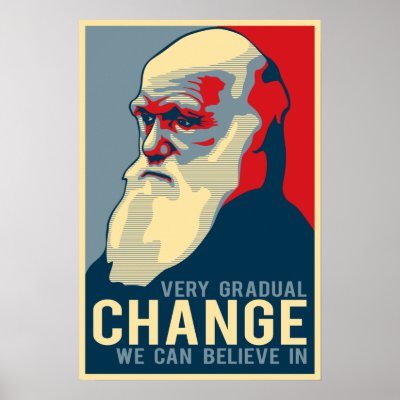
Conservatism is incremental change.

very_gradual_change_we_can_believe_in_poster-re053990fb18244368b6b2b2f0fd656da_wx5_400.jpg
 
Re: The Sad Case of the Patient Protection and Affordable Care Act

Conservatism is incremental change. Look @ the problem, study some alternatives and implement A. If A works, and there is still a problem, then study some more and implement B. Conservatives do not want to throw the baby out with the bathwater. The ACA was a jumble of everything from Plan A - Plan Z. Something in there will work, some of it is going to be an abject disaster.

Liberalism tends to want to solve the whole shebang right now.

Hardly. The logical conclusion is Universal Care. This doesn't even come close.
 
Status
Not open for further replies.
Back
Top