What's new
USCHO Fan Forum

This is a sample guest message. Register a free account today to become a member! Once signed in, you'll be able to participate on this site by adding your own topics and posts, as well as connect with other members through your own private inbox!

  • The USCHO Fan Forum has migrated to a new plaform, xenForo. Most of the function of the forum should work in familiar ways. Please note that you can switch between light and dark modes by clicking on the gear icon in the upper right of the main menu bar. We are hoping that this new platform will prove to be faster and more reliable. Please feel free to explore its features.

The Most Serious [x] Problem We Face Today

Re: The Most Serious [x] Problem We Face Today

In another thread I suggested that a particular economic condition that is receiving some attention in the news may not even be as big a problem as it's made out to be, and whatever kind of problem it is, it's not one of the ten most serious ones we face. Naturally I was then challenged to name my top ten...:p ! *

OK, so for a "serious" problem, I'm going to suggest two components: severity and likelihood. Collision of the earth with a giant comet would be extremely severe and highly unlikely; a flu epidemic would be highly likely and probably not severe enough to crack the top ten.

I don't have a formula, I'm scoring on gut reaction. Also, I reserve the right to change my list whenever I see a good suggestion from someone else...:) after all, if you steal from one person it's plagiarism, if you steal from ten people, it's research!

So, my # 1 most serious problem is a bit abstruse and yet both fairly likely and highly severe: the paucity of capital around the world relative to the commitments it is called upon to honor (in other words, the international financial crisis, described in functional terms).

Premise A: world-wide, peoples' well-being is highly dependent on international trade (the parts to everything we use come from different places, people!)
Premise B: international trade is highly dependent upon the international financial system (people need to get paid!)
Objective fact: the international financial system is founded upon capital reserves.

Sounds pretty abstract....the entire international financial system is based upon a concept called fractional reserve banking. In other words, because most of the time a significant amount of the world's money supply is in circulation, financial institutions are required to back the totality of their "book" of obligations with only a fraction of that amount in reserve capital (it's this structure that makes a "run on the bank" so lethal). Typically, the ratio is around 20:3 or maybe 4:1.

So if the value of the world's capital held in reserves is reduced by 0.5%, the cumulative amount of commitments "backstopped" by that reserve capital is reduced by 2.0%. Most of the time, because most problems have been local, there's been enough resilience world-wide that we could ride through rough patches (also, and not so long ago, the proportion of the entire supply of capital commited to reserves was lower than the the proportion of the entire supply of capital committed to reserves today. if more reserves were needed, and the "price" offered was high enough, additional capital would step forward to "beef up" the reserves: see Buffet's investment in Goldman in the middle of the crisis). Set aside the math for a moment,and think of a pantograph: a small motion in one part becomes a substantially larger motion in another part (okay, maybe that's too obscure, too...<shrug>)

Anyway, the LIBOR "scandal" merely means that banks in 2007-2008 were uneasy about the solvency of other banks, which suggests that the source of their uneasiness might be inside knowledge of how close they themselves came to the brink...

This problem has receded but by no means is solved. The situation is exacerbated by the politics: all markets want to do is settle on a price. As long as politicians keep proposing gimmicks, then accurate pricing becomes well-nigh impossible, because politicians, from the markets' perspective, by their nature are irrational and unpredictible.

This has the potential to be severe, and the likelihood is scarily high.

Fortunately, this problem can be solved with honesty and resolute willpower: provide stability and accurate information, step out of the way, allow markets to price the results appropriately, and move on from there.


* which means one of my most serious problems right now is my tendency toward hyperbole when I get passionate, and the respondant tendency of others to then take me literally and challenge me to support my assertion....

While I agree that this is a problem, I look at it more as a symptom rather than a cause.

I'll take a shot at this.

In seriousness, I think it's the general lack of civility we have towards each other when people have opposing viewpoints. It used to be that we could agree to disagree, but get on with helping and building a strong community. Nowadays, if someone says I don't agree with a point of view, they are called Un-American. (Both sides are guilty.) I recently saw a debate in one of the Houses in the UK and they were just ripping into each other's points about policy. However, I find a pic later on of the two sharing a pint. We don't compromise anymore and that's what I thought was pretty American about us. If we were this pigheaded back then, we'd still be arguing about how many houses of Congress there should be and how many reps we all get.
While this is on my list of serious problems and I totally agree that our society in general does not work the way it used to, again isn't it a symptom of bigger malaise?

So my # 2 and # 4 "most serious" on the Top Ten list are distinct yet related:

# 2: "terrorism by fanatics". I want to offer this as a pretty wide-ranging category. Basically, it is any person or group willing and able to use explosives, biological weapons, chemical weapons, or nuclear weapons, indiscriminately.

# 4: all-out cyberwarfare. I'm talking sustained, serious, co-ordinated, wide-ranging attacks back and forth that entirely disable the internet, government vs government, probably conducted by proxies for plausible deniability.


(why oh why oh why did the US own up to Stuxnet???? stupid stupid stupid!!!! :mad: )
I've always wanted to ask the terrorists one question, " Do you really think that by doing this successfully you will cause some change to happen, because it doesn't look to me like your act will have any effect what so ever in achieving your avowed goal.
 
Re: The Most Serious [x] Problem We Face Today

For problems # 3, 5, and 6, I become "provincial" in a sense and look at top US domestic problems.

# 3 on my "top ten" list is: the breakdown of the public education system and the disintegration of the nuclear family (without something else having yet developed in its place).

I list these two situations as one conjoined problem. I doubt I need to say much more about this one, I'm pretty sure we can all agree that there is a very serious and troubling long-term failure of public policy here! (though we can argue plenty about what might have caused it and how we might fix it).


An interesting solution would be to go [back] to year-round boarding schools for the underprivileged, instead of trying either to make foster care work or to try to get teenagers all on their own to raise their babies as single mothers. The teen mothers could have jobs at the boarding schools perhaps, changing linens, doing laundry, whatever, and regularly visit their children that way, so that they wouldn't be solely responsible and could be in an environment of pooled shared resources and scalable professional assistance.
 
Re: The Most Serious [x] Problem We Face Today

For problems # 3, 5, and 6, I become "provincial" in a sense and look at top US domestic problems.

# 3 on my "top ten" list is: the breakdown of the public education system and the disintegration of the nuclear family (without something else having yet developed in its place).

I list these two situations as one conjoined problem. I doubt I need to say much more about this one, I'm pretty sure we can all agree that there is a very serious and troubling long-term failure of public policy here! (though we can argue plenty about what might have caused it and how we might fix it).


An interesting solution would be to go [back] to year-round boarding schools for the underprivileged, instead of trying either to make foster care work or to try to get teenagers all on their own to raise their babies as single mothers. The teen mothers could have jobs at the boarding schools perhaps, changing linens, doing laundry, whatever, and regularly visit their children that way, so that they wouldn't be solely responsible and could be in an environment of pooled shared resources and scalable professional assistance.
Can't we just do what other countries do with their poor babies? Sell them to Angelina Jolie.
 
Re: The Most Serious [x] Problem We Face Today

# 5 on my list is how dramatically underfunded are state and municipal pensions, and the problem is worsening in geometric fashion year by year:

> the typical formula is years of service x % of final average salary
> each year, years of service goes up
> generally, each year, salary goes up (most contracts have annual raises baked in)
(far too many locales allow overtime to be included in the calculation....funny how people just before retirement see their overtime shoot way way up, eh?)
> each year, the duration until expected retirement age gets shorter, which means the incremental accrual has to be amortized over a shorter time period.

Bullets 2 - 4 above all lead to an increasing annual addition to the aggregate liability, while few states or municipalities today have the resources available to fund what's already on the books.

and if all this isn't bad enough already, the liability on the books is grossly under-reported :eek:

It's not hard to go to the Society of Actuaries website and download a pension mortality table, and create your own sample workbook for a hypothetical population. The key variable is the "expected rate of return" on pension plan assets.

There's a debate today about the "appropriate" expected rate of return (a/k/a "discount rate"):
> some say that, because there is no risk to the participants, a "risk-free" return should be used
(that would typically be a government bond rate, something like 3.5% to 4.0% in today's economy)
> some say that, because the pension plans invest in a divesified portfolio, then it's okay to use a historical rate, perhaps a ten-year rolling average?
(which is something like 5.6% based on a survey I read)

Now, these plans have long liability "tails"...some people alive today with vested pension benefits will still be receiving these pensions 45 to 50 years from now.

If you are discounting cash flows over that long a time period, even relatively small changes in the discount rate have huge implications for the size of the liability. Given that most plans until the past few years may have used 8.5%, now maybe 8.0%, a move to 5.6% or 6.0% would increase the size of the liability by 33% or more, and yet people are already groaning about how big the liabilities are and how they are "crowding out" all other governmental functions.

Oh, my oh my, we turned over a rock and found some really slimy things crawling here. This is a very serious problem; it is depressing me no end that something this serious is "only" number 5....:(
 
Re: The Most Serious [x] Problem We Face Today

Wish I had time to go through the thread more. I'm guessing I'd have some feedback. But I did have time to throw out a quick top ten for myself:

10. Cybercrime/Virus' - This can effect everything from personal position to corporate health to national security.

9. Populist Dictator-Democracies - Putin, to a lesser extent China, etc.

8. The environment - I know its unfashionable. But temperatures keep on a trending.

7. "We're not learning" - In the age of PCs, internet, etc, you think most individuals would have a better perspective on right and wrong as well as facts to make decisions. Unfortunately, inner city poor still abuse inner city poor and many others ignore facts or misinterpret others to satify the 'I'm right about this' perspective most seem to have.

6. Comparative advantage hastened inequality - Inequality has always been an issue...which makes it kind of a nonfactor. Now days though, the US has comparative advantage in high paying creative fields...whereas China/India/etc have comparative advantage in many rank and file jobs. In many cases, companies are forced to join or risk their entire workforce. Problem for US is that will increase inequality...and that increase, is a major problem.

5. The right moving way to the right - The 60s/70s extremist Goldwater said he wanted nothing to do with the extremist GOP of the 90s. Since the 90s, the right has moved far to the right. Much of the 90s establishment is trying to hang on...ask Dick Lugar. The 99%ers, the only left wing movement in years, disappeared as fast as it appeared and core left wing hippies are an extinct breed. Losing the left is not a problem. Gaining a more extreme right wing is.

4. Acceptance of American society militarization - Conceal and carry and guns in bars make guns everywhere ok. Stand your ground means that violent escalation is rewarded...if you kill someone first, you are forgiven.

3. US Debt - That and what happens when we get off the marry-go-round

2. Misprioritization of scarce public resources - Too much military (very inefficient use of resources with no usable output to society) and too little investment in education/job skills and tools (investment in the future so we can win the war that matters)

1. Government disfunction - Government can't make effective decision due to special interests, hypercompetition between parties and too much lipservice to the Constitution (its often treated as justification for a personal agenda by those who espouse it). The branches are each overreaching into each others territory...executive orders, justices putting ideology in front of the Constitution, congressional overreach. Parties rather than ideas are driving votes and divides. Facts as is too often the case are not driving outcomes.
 
Re: The Most Serious [x] Problem We Face Today

108 posts and no mention of bears?

ThreatDown1Bears05-12-2008.jpg
 
Re: The Most Serious [x] Problem We Face Today

Wish I had time to go through the thread more. I'm guessing I'd have some feedback. But I did have time to throw out a quick top ten for myself:

10. Cybercrime/Virus' - This can effect everything from personal position to corporate health to national security.

9. Populist Dictator-Democracies - Putin, to a lesser extent China, etc.

8. The environment - I know its unfashionable. But temperatures keep on a trending.

7. "We're not learning" - In the age of PCs, internet, etc, you think most individuals would have a better perspective on right and wrong as well as facts to make decisions. Unfortunately, inner city poor still abuse inner city poor and many others ignore facts or misinterpret others to satify the 'I'm right about this' perspective most seem to have.

6. Comparative advantage hastened inequality - Inequality has always been an issue...which makes it kind of a nonfactor. Now days though, the US has comparative advantage in high paying creative fields...whereas China/India/etc have comparative advantage in many rank and file jobs. In many cases, companies are forced to join or risk their entire workforce. Problem for US is that will increase inequality...and that increase, is a major problem.

5. The right moving way to the right - The 60s/70s extremist Goldwater said he wanted nothing to do with the extremist GOP of the 90s. Since the 90s, the right has moved far to the right. Much of the 90s establishment is trying to hang on...ask Dick Lugar. The 99%ers, the only left wing movement in years, disappeared as fast as it appeared and core left wing hippies are an extinct breed. Losing the left is not a problem. Gaining a more extreme right wing is.

4. Acceptance of American society militarization - Conceal and carry and guns in bars make guns everywhere ok. Stand your ground means that violent escalation is rewarded...if you kill someone first, you are forgiven.

3. US Debt - That and what happens when we get off the marry-go-round

2. Misprioritization of scarce public resources - Too much military (very inefficient use of resources with no usable output to society) and too little investment in education/job skills and tools (investment in the future so we can win the war that matters)

1. Government disfunction - Government can't make effective decision due to special interests, hypercompetition between parties and too much lipservice to the Constitution (its often treated as justification for a personal agenda by those who espouse it). The branches are each overreaching into each others territory...executive orders, justices putting ideology in front of the Constitution, congressional overreach. Parties rather than ideas are driving votes and divides. Facts as is too often the case are not driving outcomes.

Mitt Romney will solve all those problems his first 100 days in office.
 
Re: The Most Serious [x] Problem We Face Today

Love ya, Scoob, but this is getting a little old.

Yeah, you're right of course. But, it's all I get out of him or his campaign right now. Maybe if they actually spoke in detail on a policy matter?
 
Re: The Most Serious [x] Problem We Face Today

Yeah, you're right of course. But, it's all I get out of him or his campaign right now. Maybe if they actually spoke in detail on a policy matter?

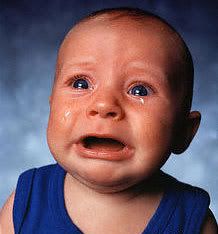
Mittens has radically retooled his campaign, since the substantive content of all his statements is now this:

crying-baby.jpg
 
Re: The Most Serious [x] Problem We Face Today

Not sure whether it's worth ranking # 7 - 10 in any particular order....at least I'm on track to meet the challenge though..:)

# 6 on my list is the imbalance between the rate of growth in government spending relative to the rate of growth of the economy (as measured by GDP). There are long-term historical ranges within which the economy functions pretty effectively, and we are well outside the upper limits of that range right now.

This is really important because without growth in the economy, the government lacks the revenue to sustain the spending, and without significant restraint in the rate of growth of government spending, attempts to raise revenue will merely have the paradoxical effect of slowing growth in the economy even further.

This problem has really been exacerbated in the past three years by the overlay of significant uncertainty regarding future tax rates and regulatory regimes. Modern business is remarkably adaptive; however, it really needs to know what it is reacting to, and the current high degree of uncertainly disrupts attempts to respond to opportunities that might be available, except for how long? You spend billions building a new factory and suddenly the NLRB just makes something up and you might not be able to use the factory, not because you broke any law or violated any regulation, but merely because it wasn't politically expedient? Until the past few years, regulatory agencies at least respected the laws and tried to enforce them; it's only recently that the linkage between actual law and regulatory action has been discarded in favor of nakedly partisan political advantage (see how the normal bankruptcy process for GM and Chrysler was subverted, the traditional, legally-sanctioned order of prioritization under which creditors' claims were supposed to be honored was totally undermined, so that bondholders were hosed and the UAW rewarded out of all proportion to its actual claims).

so that's another problem, # 9 on my list, excessive, contradictory, arbitrary, unpredictable regulatory regimes.

# 7 on my list is the evolution of antibiotic-resistant bacteria, we are walking a knife edge here, hospitals obviously don't want you to know how high is the risk that you'll contract a serious infection during a hospital stay, and some of the MRSA that's evolved has been devilishly difficult to bring under control.
 
Last edited:
Re: The Most Serious [x] Problem We Face Today

In a sad reminder of one of the top problems on my list of too much of a guns culture...12 dead and 38 hurt in Batman's opening night.

We talk about all these esoteric problems...but few problems we face have the brutal impact on society like overt gun violence. Outside of the defense of one's home, guns are far more of a danger and detrement to society than a help.
 
Re: The Most Serious [x] Problem We Face Today

In a sad reminder of one of the top problems on my list of too much of a guns culture...12 dead and 38 hurt in Batman's opening night.

We talk about all these esoteric problems...but few problems we face have the brutal impact on society like overt gun violence. Outside of the defense of one's home, guns are far more of a danger and detrement to society than a help.
Gun violence is certainly a problem and I'd support some tightening of gun registration rules and such, but there are a variety of legitimate gun uses, with hunting coming to mind at the moment. Not into it myself, but if uses like that ever get impaired, it'll be a sad day.
 
Re: The Most Serious [x] Problem We Face Today

In a sad reminder of one of the top problems on my list of too much of a guns culture...12 dead and 38 hurt in Batman's opening night.

We talk about all these esoteric problems...but few problems we face have the brutal impact on society like overt gun violence. Outside of the defense of one's home, guns are far more of a danger and detrement to society than a help.

All I know is that if I start seeing security lines at movie theaters like I do at airports - I'm going to lobby the police to ship that idiot off to some fingernail factory in the Middle East.
 
Re: The Most Serious [x] Problem We Face Today

Gun violence is certainly a problem and I'd support some tightening of gun registration rules and such, but there are a variety of legitimate gun uses, with hunting coming to mind at the moment. Not into it myself, but if uses like that ever get impaired, it'll be a sad day.
Same here.
 
Re: The Most Serious [x] Problem We Face Today

The problem with the gun argument is, much of what you can do to limit them is going to hurt someone who uses guns responsibly and correctly, and do nothing to the criminal who will buy them illegally anyway.
 
Re: The Most Serious [x] Problem We Face Today

Gun violence is certainly a problem and I'd support some tightening of gun registration rules and such, but there are a variety of legitimate gun uses, with hunting coming to mind at the moment.

Who needs to shoot 50 deer in the span of a minute or two? There's no other purpose for the weapon used than what it was used for.
 
Back
Top