What's new
USCHO Fan Forum

This is a sample guest message. Register a free account today to become a member! Once signed in, you'll be able to participate on this site by adding your own topics and posts, as well as connect with other members through your own private inbox!

  • The USCHO Fan Forum has migrated to a new plaform, xenForo. Most of the function of the forum should work in familiar ways. Please note that you can switch between light and dark modes by clicking on the gear icon in the upper right of the main menu bar. We are hoping that this new platform will prove to be faster and more reliable. Please feel free to explore its features.

Space Exploration II: Always Looking up

Timelapse photo of a comet. The lines are all satellites destroying the night sky.

image_5276a2.png
There was supposed to be an agreement that all of those satellites were supposed to be painted very flat black so the impact could be minimized. So much for that.
 
There are currently 10,000 Starlink satellites each with a 30 meter wingspan. Musk's plan to put AI data centers in space proposes 1 million each 100 meters across.

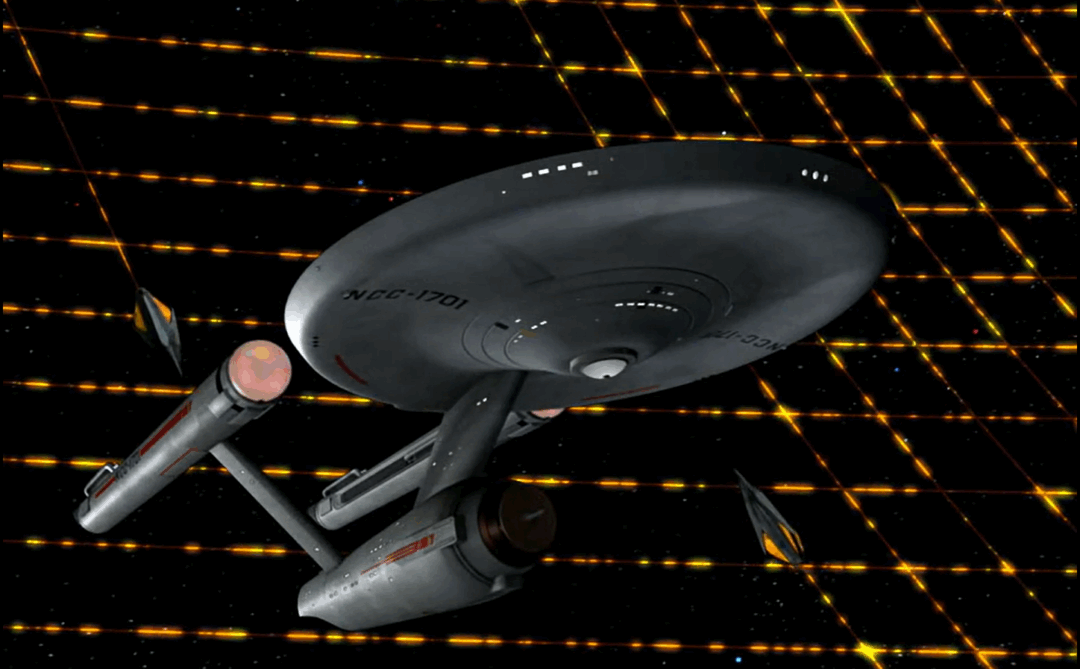
We are weaving the Tholian Web.

s3e09-Tholian-Web-e1744897090163.png
 
Last edited:
Very cool, so to speak.

The researchers found that the observations are best explained by a thin atmosphere surrounding 2002 XV93. Their calculations indicate that such an atmosphere would dissipate in less than 1,000 years unless it is somehow replenished. That means it must have formed — or been replenished — relatively recently.

“Observations by the NASA/ESA/CSA James Webb Space Telescope show no signs of frozen gases on the surface of 2002 XV93 that might sublimate to form an atmosphere,” the authors said. “One possibility is that some event brought frozen or liquid gases from deep inside the TNO to the surface.” “Another possibility is that a comet crashed into 2002 XV93, releasing gas that formed a temporary atmosphere.” “Further observations are needed to distinguish between these two scenarios.”

“This discovery shows that even a few-hundred-kilometer TNO can host, at least transiently, an atmosphere, challenging standard volatile-retention scenarios,” they concluded. “Our findings suggest that a fraction of distant icy minor planets can exhibit atmospheres, potentially sustained by ongoing cryovolcanic activity or produced by a recent impact of a small icy object.”

If you want to really dive in, here is an archiv paper on the state of discrepancies in volatile retention, from 11 years ago. Insofar as I understand it at all, it seems to indicate that initial modeling showed that expected sublimations of certain elements would be the best bet for retention but, nope, turned out it aint that way at all.
 
Last edited:
In the list of things I didn't expect to go boom surrounding SpaceX's Starship: the water suppression system just exploded during testing.


The 12th attempt at successfully getting Starship to orbit is a week or two away.

Who knew they were already on the third version of Starship too?
 
In the list of things I didn't expect to go boom surrounding SpaceX's Starship: the water suppression system just exploded during testing.


The 12th attempt at successfully getting Starship to orbit is a week or two away.

Who knew they were already on the third version of Starship too?

LOLs.

To place this immense power in context, the Apollo‐era Saturn V rocket that took
humanity to the moon produced just 7.6 million pounds of thrust and NASA’s modern
Space Launch System (SLS) generates 8.8 million pounds. By comparison, Starship
generates nearly twice the thrust of NASA’s SLS and nearly ten times the thrust of
SpaceX’s own Falcon 9 rocket. Yet, SpaceX’s Starship operations rely on decades‐old
acoustic prediction model theories. The sheer scale and novel configuration of the Raptor
2 engines produce an acoustic profile that confounds these traditional modeling
formulas, which fail to properly account for the frequency‐dependent source levels,
extreme low‐frequency rumble, and intense transitory crackle unique to Starship. By
unleashing unprecedented mechanical power that outstrips the bounds of historical
acoustic science, SpaceX knowingly subjects the surrounding communities to a
foreseeable, yet inadequately modeled, peril.

69. SpaceX has publicly acknowledged a scientific and regulatory knowledge deficit
surrounding its novel Starship propulsion system. In an official update regarding its
vision for a “Multiuser Spaceport,” SpaceX admitted that because next‐generation rockets
like Starship utilize liquid oxygen and methane (methalox) propellants—as opposed to
the hydrogen or kerosene fuels used historically—there is a lack of “data to make refined,
accurate clear zones” for blast and acoustic impacts. By its own admission, SpaceX is
“making significant investments in scientific research on blast and acoustics” specifically
to address this “gap in data.” This statement serves as a formal admission that,
throughout its Starship orbital campaign, SpaceX has been launching the most powerful
rocket in history while simultaneously acknowledging that the scientific community
lacks the comprehensive data necessary to accurately predict and mitigate the resulting
acoustic and blast‐related harms to the surrounding public. SpaceX’s Starship operations
are therefore experimental and iterative by nature. Each launch generates new acoustic
data for SpaceX and its regulators.

70. SpaceX’s inaugural Starship test flight on April 20, 2023, violently illustrated both
the unprecedented power of Starship’s Raptor engines and the scientific and regulatory
“gap in data.” SpaceX so vastly underestimated the explosive, acoustic energy of its own
thirty‐three‐engine booster that the Starship’s liftoff completely shattered the facility’s
reinforced concrete launch pad. The sheer force of the ignition and its resulting concrete
rock tornado carved a crater into the ground and generated a massive debris cloud of
pulverized concrete and metal shrapnel that rained down over 385 acres, reaching tidal
flats and residential areas up to six and a half miles away. SpaceX’s CEO, Elon Musk,
later admitted the company did not anticipate the destruction of the pad, stating, “If we
had expected to dig a hole, we would not have flown.” Following this catastrophe, the
FAA grounded the Starship program for months, citing the need for sixty‐three corrective
actions to address the unplanned debris and public safety risks. From the very
beginning of its Starship orbital campaign, SpaceX had actual, subjective knowledge that
it was navigating uncharted, highly dangerous, and destructive acoustic territory.

Fuck you, Elmo. Sue him into penury.
 
All you need to do sx is to not blow up. And go into orbit before trying for the moon. It’s not that hard- nasa has done it twice in the last few years. You claim to be better, but you are best in sucking really badly and not being rocket scientists.
 
All you need to do sx is to not blow up. And go into orbit before trying for the moon. It’s not that hard- nasa has done it twice in the last few years. You claim to be better, but you are best in sucking really badly and not being rocket scientists.
Like always with Musk (and Trump), he has to talk like he's the biggest dick in camp. It's not enough to get a rocket off to the moon, it has to be the biggest, bestest rocket ever.
 
Live webcam, Extremely Large Telescope construction site, Chile.

The observatory's design will gather 100 million times more light than the human eye, equivalent to about 10 times more light than the largest optical telescopes in existence as of 2025, with the ability to correct for atmospheric distortion. It has around 250 times the light-gathering area of the Hubble Space Telescope and, according to the ELT's specifications, will provide images 15 times sharper than those from Hubble.

First Light is set for March 2029.
 
The ELT is a downsize from the Overwhelmingly Large Telescope (OLT) which was the initial concept. The ELT primary mirror is 39 m, the largest (by far) ever built. The OLT was designed to be 100 m. The OLT would be able to do spectroscopic scans of exoplanets around the 40 nearest sun-like stars, a sphere about 40 ly in radius.

In this spirit, a great idea is the Terrascope, which would use the Earth's atmosphere and gravity as a lens to bend light to a focal point about one million km from the Earth (roughly 1/200th the distance to the Sun). Putting a small orbital telescope there would allow us to resolve continents in exoplanets and directly image the surface, detecting large geological formations.

A neat extension of the idea is using the Sun as a solar gravitational lens (SGL). The Sun's gravity bends light around its perimeter and a collector placed at the focus would be like having a primary mirror of 1.39 x 10^9 meters diameter. It could, for example, resolve cities on an exoplanet!

This is not theory. We have already used gravitational lensing -- in fact we've used entire star clusters millions of light years across for lensing! That's how we have seen almost all the way to the beginning of time. We found the exoplanet OGLE-2017-BLG-0364Lb which is about the size of Neptune and, get this, 32,600 ly away! But the problem with using such a distant lens is we have no control -- we are stuck at a fixed point and can't alter anything about the focus or the objective. We get whatever tiny point in the light cone we happen to pass through, period. The light collected is scant, and the time period of transit is infinitesimal (nanoseconds). It works to set up a yes/no test of a specific hypothesis, but it's like a single anecdote, not a controlled survey where from the mass of data new knowledge can be inferred.

I wish the apes would stop making weapons and take all that energy, knowledge, labor, money, and sheer psychic will and put it somewhere important.
 
Last edited:
I'm on a roll, I know.

Fun fact: Proxima Centauri is 4.24 ly away, the closest star to the Sun. In 1.2 million years, Gliese 710 (HIP 89825) will pass within just 0.17 ly of us. That's 10.6k AU (1 AU is mean distance of the Earth to the Sun). To give a scale, Voyager has traveled 170 AU. When Gliese has its closest approach Voyager will be about 40% of the distance to its distance -- though of course it's not pointed at it so it will be much farther away. But it's kind of cool it will be in the ballpark.
 
Back
Top