
USCHO Fan Forum
-
The USCHO Fan Forum has migrated to a new plaform, xenForo. Most of the function of the forum should work in familiar ways. Please note that you can switch between light and dark modes by clicking on the gear icon in the upper right of the main menu bar. We are hoping that this new platform will prove to be faster and more reliable. Please feel free to explore its features.
You are using an out of date browser. It may not display this or other websites correctly.
You should upgrade or use an alternative browser.
You should upgrade or use an alternative browser.
Hobbies - A thread for other things we kill time doing.
- Thread starter aparch
- Start date



Kepler
I loafe and invite my soul
Best image to date: not touched up in any way, this is how it appears through the scope.
M 57 Ring Nebula. 2,570 light years away.
M 57 (the Ring Nebula) was formed thousands of years ago when a dying, sun-like star exhausted its nuclear fuel and shed its outer layers of gas into space. This glowing, expanding shell of stellar material is illuminated by the incredibly hot, exposed core of the original star, which is now a compact white dwarf.
When (it) formed roughly 1,600 to 2,000 years ago, its gas shell was smaller, denser, and closer to its hot central star. Theoretical models suggest it was likely intrinsically brighter in its infancy—potentially shining up to several hundred times the luminosity of our Sun—before the expanding gas cooled and diffused over the centuries.
(T)he light blue color of the inner ring is the glow of hydrogen and oxygen, and the reddish color of the outer ring is from nitrogen and sulfur.
M 57 Ring Nebula. 2,570 light years away.
Attachments

Last edited:

MissThundercat
Are the cis okay?
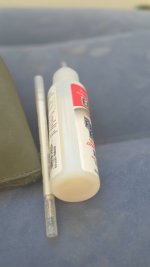
Trying to put rhinestones and beads on a dress with a $5 tool, fabric glue, and nonexistent executive function.



Proud2baLaker
Master of Science
Another release of F1? I am a little tired of them honestly. I had gotten a few of them before they did the official F1 releases and then picked up one or 2 of the F1 branded ones. And then the only ones I did get were more for the Maker vs being F1 (I try to get every Aston Martin, Ferrari, and McLaren, after that it depends).View attachment 2698
$330 for the 11 2026 cars? My wallet is unprepared.

aparch
Acetaminamerican
Sounds like it. And a second wave of the (much cheaper, but less detailed) mini-F1 sets as well.Another release of F1? I am a little tired of them honestly. I had gotten a few of them before they did the official F1 releases and then picked up one or 2 of the F1 branded ones. And then the only ones I did get were more for the Maker vs being F1 (I try to get every Aston Martin, Ferrari, and McLaren, after that it depends).
I'll wait till they release and check the digital instructions to see if they'd be worth getting. I appreciated the unique designs and building techniques for the 2024 cars, but I don't know if the 2026 cars will be all that different. I haven't put the Audi together yet, but I did read that more resembles the non-F1 branded cars than the F1 branded cars.
Proud2baLaker
Master of Science
I had built the 2024 McLaren and Aston and the 2022 Mercedes which were not "F1" branded and liked them. When the F1 brand came around, the Aston, McLaren, and Mercedes looked almost identical to the previous versions other than the Minifigures (and their helmets) and 1 or 2 other minor things so I didn't bother. I did get F1 Ferrari and Oracle Red Bull because I liked the looks but didn't bother with any others. I did finally find the Lego F1 Academy Lego branded car (77258) but its actually less detailed than the other F1 braded cars and has about 50-75 parts less than the F1 branded. I will have to wait and see what, if anything, they do differently with the 2027 versions. I'd like to see more of the older iconic sports cars and what not from the 50s-70s and maybe some of the 80s and 90s depending on which ones. I'd really love to see some stuff from like the 30s like Bently, Bugatti, Rolls Royce, etc. Some cool stuff there.Sounds like it. And a second wave of the (much cheaper, but less detailed) mini-F1 sets as well.
I'll wait till they release and check the digital instructions to see if they'd be worth getting. I appreciated the unique designs and building techniques for the 2024 cars, but I don't know if the 2026 cars will be all that different. I haven't put the Audi together yet, but I did read that more resembles the non-F1 branded cars than the F1 branded cars.



RaceBoarder
Waiting for the Snow to fly...
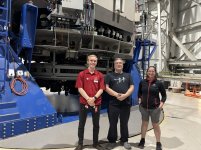
You may want to walk back your "Nuke the South" comments looking like that Kep, ha ha....
Kepler
I loafe and invite my soul
You may want to walk back your "Nuke the South" comments looking like that Kep, ha ha....
I'll wear my redneck proudly in front of Saint Peter. If He can't sort it out we're all lost anyway.
Novit enim Dominus qui sunt eius.

unofan
Well-known member
With the daughter away at summer camp for a few weeks and my wife doing the full week of RAGBRAI, I decided to indulge the definitely-not-a-midlife-crisis (because I don't believe in such things) and did a motorcycle track day out in the middle of no where Nebraska. 30 minutes on track/30 minutes off every hour all day. The classroom portions of the new rider's school could've been condensed down from about 4 sessions to 2, IMO, but the on-track instructors were great. Most of the people out there reminded me of my late father-in-law, and I would guess the average age of all the riders was well over 40, most of them have just been doing it for two decades. Only crashes I saw all day were from a few of the 20-somethings in the newbie school pushing things a little too hard, but everyone walked away with just some minor damage to their bikes.
10/10 would do again, even given the heat (was 115 plus humidity on the paddock asphalt by the middle of the afternoon, I ended up skipping my last on-track session due to getting close to actual heat stroke).

10/10 would do again, even given the heat (was 115 plus humidity on the paddock asphalt by the middle of the afternoon, I ended up skipping my last on-track session due to getting close to actual heat stroke).
MissThundercat
Are the cis okay?
Competing for Rumors Amateur Drag Queen of the Year next month.
I just want to not finish in last place. Drag is 100x more difficult when your budget is "what you can find in the couch."
I just want to not finish in last place. Drag is 100x more difficult when your budget is "what you can find in the couch."

Kepler
I loafe and invite my soul
Gorgeous photo. You have a special setup to not get much/any earth rotation?
Seestar scope tracks with the rotation and optimized purely for the camera lens. Wonderful.
Proud2baLaker
Master of Science
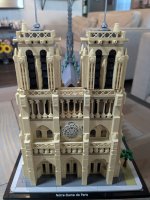
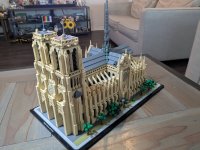
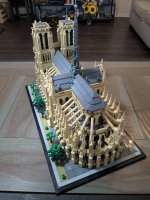
My birthday gift to myself this year: Notre Dame de Paris
Lots of repetitive steps in this one but still very cool. You build this in the same order it was built in real life. So instead of just ground up, you start from the bottom at the "back" and then work up, then forward to the next section and from the ground up. And so on. Adding external details later when they were actually added and then finishing with the spire which wasn't added until the 1800s (the initial cornerstone was lain in 1163). The majority of it was completed in 1345 but there were various small additions and restorations/renovations before the spire was completed in 1864 (started in 1844). If I recall correctly, it is technically not complete as there were supposed to be additional spires but it is very unlikely they will ever be "complete".
This set clocks in at 4383 parts. The upcoming LEGO version of Sagrada Familia will have 12060 parts. An interesting choice to make that one from Lego considering that, though it has been consecrated, it is definitely still under construction.
Lots of repetitive steps in this one but still very cool. You build this in the same order it was built in real life. So instead of just ground up, you start from the bottom at the "back" and then work up, then forward to the next section and from the ground up. And so on. Adding external details later when they were actually added and then finishing with the spire which wasn't added until the 1800s (the initial cornerstone was lain in 1163). The majority of it was completed in 1345 but there were various small additions and restorations/renovations before the spire was completed in 1864 (started in 1844). If I recall correctly, it is technically not complete as there were supposed to be additional spires but it is very unlikely they will ever be "complete".
This set clocks in at 4383 parts. The upcoming LEGO version of Sagrada Familia will have 12060 parts. An interesting choice to make that one from Lego considering that, though it has been consecrated, it is definitely still under construction.