What's new
USCHO Fan Forum

This is a sample guest message. Register a free account today to become a member! Once signed in, you'll be able to participate on this site by adding your own topics and posts, as well as connect with other members through your own private inbox!

  • The USCHO Fan Forum has migrated to a new plaform, xenForo. Most of the function of the forum should work in familiar ways. Please note that you can switch between light and dark modes by clicking on the gear icon in the upper right of the main menu bar. We are hoping that this new platform will prove to be faster and more reliable. Please feel free to explore its features.

Space Exploration II: Always Looking up

The claim is after the landing there is a controlled demolition to dispose of the rocket. I would think since the point is to collect data you would want to keep transmitting from all your sensors for as long as possible, not immediately explode. But I also don't do this professionally because I am way too dumb.

Luckily, we have a guy here who does cuz he isn't.
 
The claim is after the landing there is a controlled demolition to dispose of the rocket. I would think since the point is to collect data you would want to keep transmitting from all your sensors for as long as possible, not immediately explode. But I also don't do this professionally because I am way too dumb.

Luckily, we have a guy here who does cuz he isn't.
As a former engineer that did a lot of development work, blowing it up makes no sense at all. Landing it (showing that you can do something that still hasn't happened) and inspecting every little thing is a really big deal. Especially checking to make sure that everything that was breaking didn't show other unexpected signs of wear that could result in a failure. Which is rather important when you are carrying people.

Very, very, very rarely were engines intentionally trashed to failure for the sake of doing it.
 
Also, that thing needs to safely and successfully land on the moon with two humans on board.

So "blowing it up for the data" makes zero sense.
 
As a former engineer that did a lot of development work, blowing it up makes no sense at all. Landing it (showing that you can do something that still hasn't happened) and inspecting every little thing is a really big deal. Especially checking to make sure that everything that was breaking didn't show other unexpected signs of wear that could result in a failure. Which is rather important when you are carrying people.

Very, very, very rarely were engines intentionally trashed to failure for the sake of doing it.
Completely agree. Just a little too coincidental that the "planned explosion" happened at the exact moment the rocket smashed into the surface of the ocean. Exploding it is likely to leave some really, really large pieces of debris anyway so what's the purported advantage over just letting it sink as a whole?
 
Completely agree. Just a little too coincidental that the "planned explosion" happened at the exact moment the rocket smashed into the surface of the ocean. Exploding it is likely to leave some really, really large pieces of debris anyway so what's the purported advantage over just letting it sink as a whole?
We don't want the dolphins reverse engineering it.
 
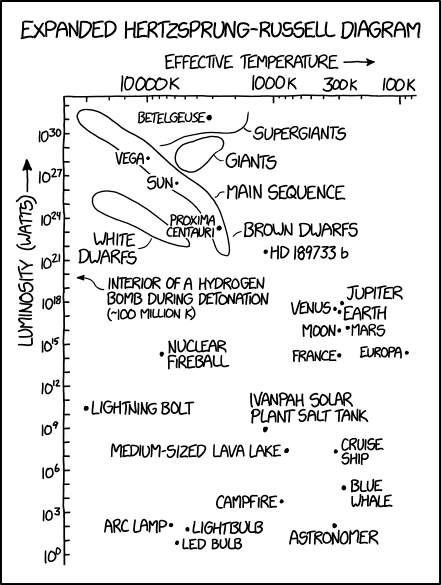
hertzsprung_russell_diagram.png
 
The air leak in Russia's Zvezda service module for the International Space Station has worsened and NASA has ordered their four person crew to don their spacesuits and shelter in the Crew Dragon capsule and prepare for an evacuation of the ISS.

Three Russian astronauts, also on board, are attempting repairs.
 
The air leak in Russia's Zvezda service module for the International Space Station has worsened and NASA has ordered their four person crew to don their spacesuits and shelter in the Crew Dragon capsule and prepare for an evacuation of the ISS.

Three Russian astronauts, also on board, are attempting repairs.
What is it from? A joint leak or a micro meteor hole?
 
What is it from? A joint leak or a micro meteor hole?
It's not exactly clear which it is. Assumption is a stress crack or joint leak. Zvezda is the oldest piece of the entire ship, despite being the third piece launched, because the hull was originally completed in 1985 for use on Mir. It was the original living quarters and life support system component.

Apparently the disagreement between NASA and Roscosmos came in how Russia proposed to find and fix the leak. They were going to cut along the inner structure panels to expose the outer shell to seal it. NASA said no fuckin' way and ordered their four astronauts into Crew Dragon, along with the American who tagged along on the Russian Soyuz crew.

After two hours, Roscosmos said that one leak was sealed and the other leak was being prepped and the atmosphere rate loss was acceptable and did not put the crews in jeopardy.

 
Zvezda is the oldest piece of the entire ship, despite being the third piece launched, because the hull was originally completed in 1985 for use on Mir. It was the original living quarters and life support system component.
I completely forgot that they pretty much recycled Soviet-era equipment for their early contributions to the ISS.
 
Observing Saturn's moons this morning, I found this fun fact:

Sidera Lodoicea /ˈsɪdərə ˌloʊdoʊˈɪsiːə/ is the name given by the astronomer Giovanni Domenico Cassini to the four moons of Saturn discovered by him in the years 1671, 1672, and 1684 and published in his Découverte de deux nouvelles planètes autour de Saturne in 1673 and in the Journal des sçavans in 1686. These satellites are today known by the following names, given in 1847:
  • Iapetus or Saturn VIII, discovered October 25, 1671
  • Rhea or Saturn V, discovered December 23, 1672
  • Tethys or Saturn III, discovered March 21, 1684
  • Dione or Saturn IV, discovered March 21, 1684

The name Sidera Lodoicea means "Louisian Stars", from Latin sidus "star" and Lodoiceus, a nonce adjective coined from Lodoicus, one of several Latin forms of the French name Louis (reflecting an older form, Lodhuwig). Cassini intended the name to honor King Louis XIV of France, who reigned from 1643 to 1715, and who was Cassini's benefactor as patron of the Paris Observatory, of which Cassini was the director.


The name was modelled on Sidera Medicea, "Medicean stars", the Latin name used by Galileo to name the four Galilean satellites of Jupiter, in honor of the Florentine house of Medici.

Louis XIV


The following contemporary (1686) notice records Cassini's choice of name, and explains his rationale for the same:

In the Conclusion, the Discoverer considers that the Antient Astronomers, having translated the Names of their Heroes among the Starrs, those Names have continued down to us unchanged, notwithstanding the endeavour of following Ages to alter them; and that Galileo, after their Example, had honoured the House of the Medici with the discovery of the Satellites of Jupiter, made by him under the Protection of Cosmus II; which Starrs will be always known by the Name of Sidera Medicea. Wherefore he concludes that the Satellites of Saturn, being much more exalted and more difficult to discover, are not unworthy to bear the Name of Louis le Grand, under whose Reign and in whose Observatory the same have been detected, which therefore he calls Sidera Lodoicea, not doubting but to have perpetuated the Name of that King, by a Monument much more lasting than those of Brass and Marble, which shall be erected to his Memory.


Also found this great story:

 
Back
Top